

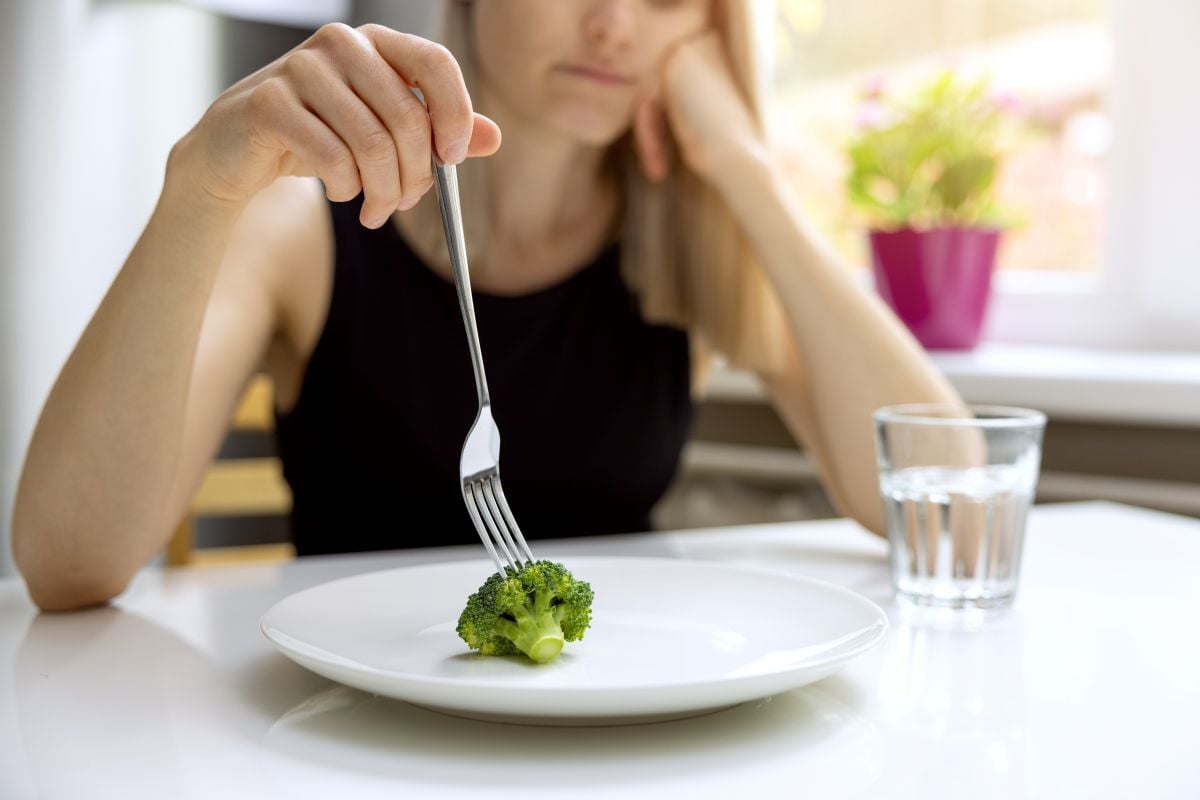
Eating disorders and addiction often show up together in ways people don’t expect. On the outside, they look like two separate struggles. But underneath, they are often connected by the same pain, the same fear, and the same search for relief.
Sometimes it starts with alcohol or drugs. Sometimes it starts with food, weight, or body image. Sometimes both struggles grow quietly at the same time. However it begins, living with both can feel exhausting. It can feel like constantly trying to hold yourself together while everything inside feels heavy.
If that sounds familiar, please know this: you are not alone, and this can get better.
At Avenues Recovery Centers, we know recovery is about more than stopping one behavior. It is about healing the hurt underneath it all.
How Eating Disorders and Addiction Are Connected
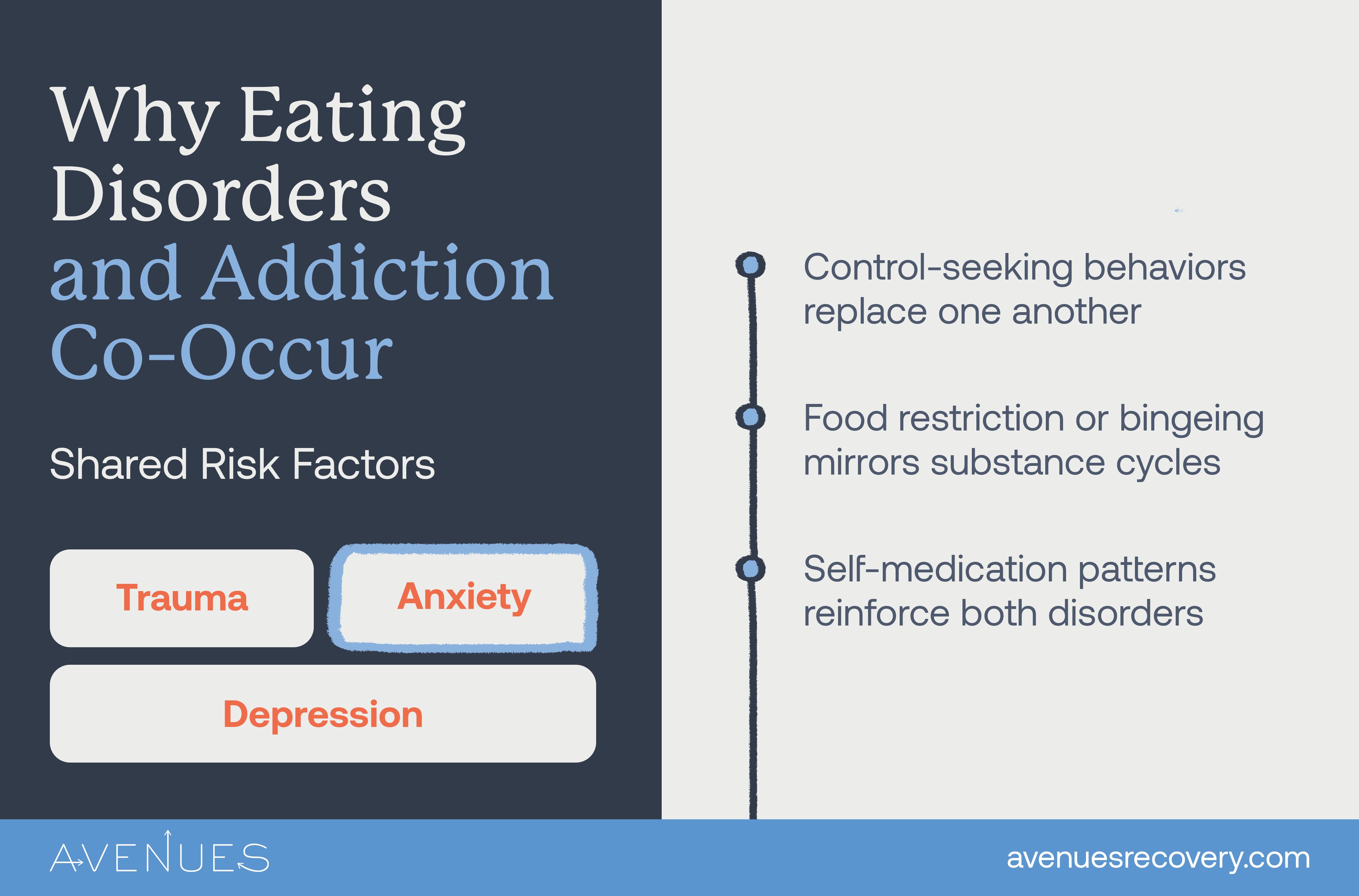
Many people who struggle with addiction also struggle with disordered eating. This is because both can become ways of coping when life feels overwhelming. A person may drink to quiet anxiety, use drugs to escape painful memories, restrict food to feel in control, binge eat to soothe emotional pain, or purge because shame feels unbearable. These behaviors may look different, but they often come from the same place, trying to survive difficult feelings.
What begins as relief can slowly turn into a cycle that feels impossible to break. A drink to relax becomes dependence. Skipping meals becomes an obsession. Bingeing becomes guilt. Then the shame from one struggle fuels the other.
This is not weakness. It is not failure. It is what happens when someone is hurting and does not yet have the support they need.
Common Eating Disorders
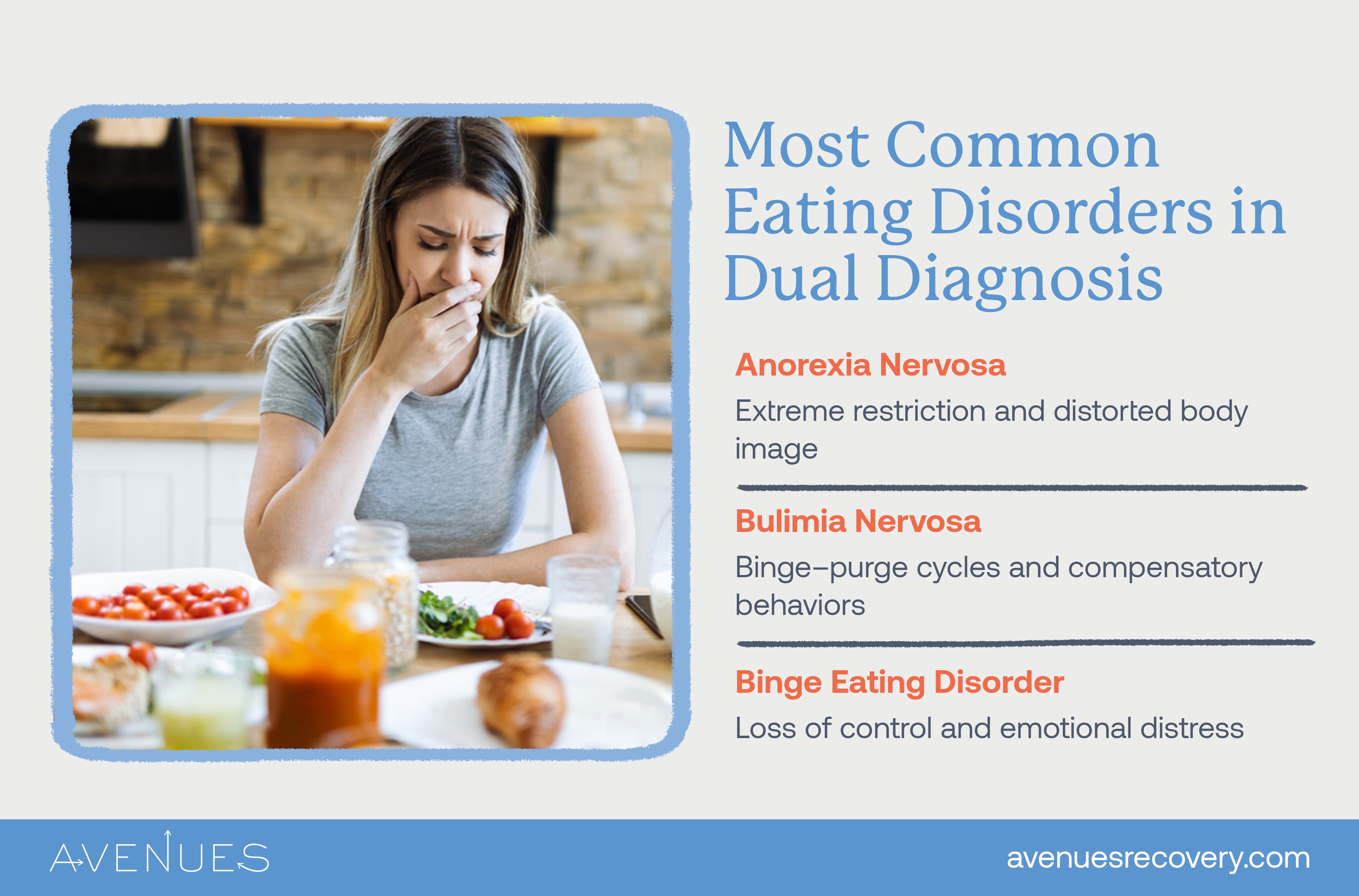
Anorexia nervosa often involves intense fear of weight gain and severe restriction of food. Even when someone is physically unwell, they may still believe they need to lose more weight. What others may mistake for discipline is often deep suffering.
Bulimia nervosa usually involves episodes of binge eating followed by behaviors like vomiting, laxative misuse, fasting, or excessive exercise. Many people feel trapped in the cycle of secrecy, panic, and shame.
Binge eating disorder involves eating large amounts of food while feeling unable to stop. Afterwards, a person may feel guilt, sadness, or self-hatred. Many people carry this pain silently for years.
Signs Someone May Be Struggling
Eating disorders are not always obvious. Many people become experts at hiding what they are going through. You may notice sudden weight changes, constant worry about food or appearance, skipping meals, eating in secret, withdrawing from social situations, mood swings, or exhaustion. Some people seem fine on the outside while privately feeling consumed by thoughts of food, weight, or shame.
Why These Struggles Often Happen Together
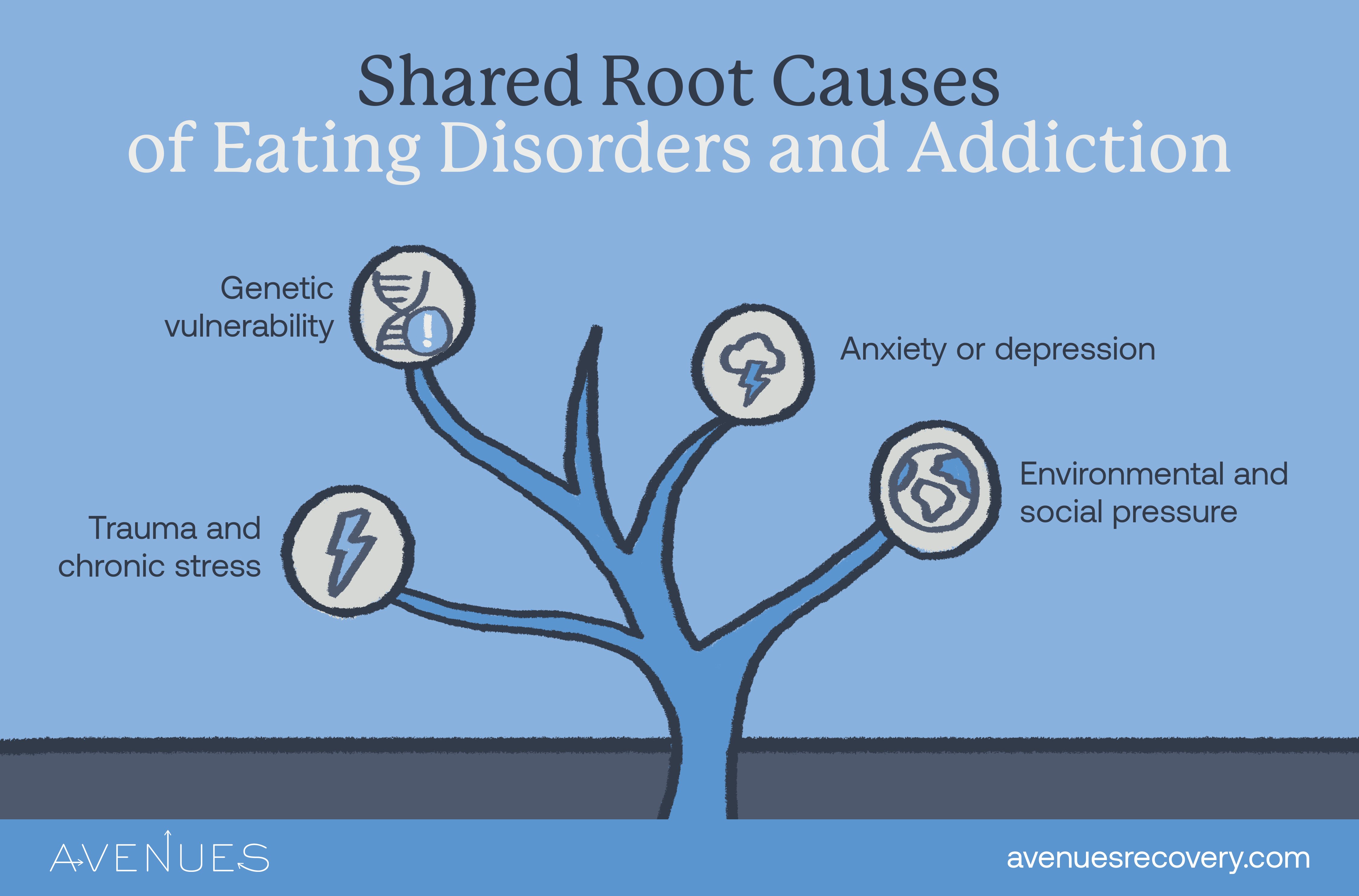
There is usually more than one reason someone develops an addiction or an eating disorder. Often, several painful factors overlap. Trauma is a common piece of the story. Abuse, neglect, grief, bullying, or chronic stress can leave wounds that do not simply disappear. Many people turn to substances or food behaviors to numb pain or feel some sense of control. Mental health struggles also play a major role. Anxiety, depression, PTSD, obsessive thoughts, and low self-worth often sit beneath both conditions. Family history and genetics can increase vulnerability too. Some people are simply more susceptible to addictive patterns or mental health challenges. And then there is the world around us. We are surrounded by messages about perfection, appearance, productivity, and escape. Those pressures can deeply shape how people cope.
Why Both Need to Be Treated
When someone is struggling with both addiction and an eating disorder, treating only one issue usually is not enough. If the substance use stops but the eating disorder remains, the same pain may still be there looking for somewhere to go. If eating behaviors improve but addiction continues, healing is still incomplete. That’s why dual diagnosis treatment matters. It looks at the full picture instead of only one symptom. At Avenues Recovery Centers, we help people untangle the patterns that have kept them stuck. We offer care that addresses addiction, mental health, trauma, and co-occurring struggles together, because real recovery should feel whole.
Treatment may include therapy, group support, medical care, trauma-informed counseling, nutrition support, relapse prevention, and a plan for life after treatment. But most importantly, it includes compassion.
How Recovery Builds Self-Trust
Both addiction and eating disorders can damage a person’s trust in themselves. Many people begin to feel like they cannot rely on their own thoughts, emotions, or choices. They may question every decision, feel ashamed of past behaviors, or believe they have lost control for good. Recovery helps rebuild that trust little by little. It can start with small moments like eating a meal without guilt, asking for support instead of isolating, setting a healthy boundary, or making it through a hard day without returning to old patterns. Those moments matter more than they may seem. Over time, confidence begins to grow. People start to recognize that healing is not about being perfect. It is about learning they are capable of caring for themselves in new ways.
Why Recovery Can Feel Triggering at First
Many people are surprised to learn that early sobriety can bring eating struggles to the surface.
When substances are no longer numbing emotions, feelings often return strongly. Stress may feel sharper. Old insecurities may get louder. Some people begin controlling food, overeating, or obsessing over their body as a new way to cope. This does not mean recovery is failing. It means deeper healing is needed. That’s why honest conversations, regular check-ins, and proper support matter so much during recovery.
Living with addiction is painful. Living with addiction and an eating disorder can feel unbearably heavy. But people heal from both every single day.
You do not have to keep managing this alone. You do not have to wait until it gets worse. You do not have to prove how much you are hurting before asking for help.
At Avenues Recovery Center, we meet people with warmth, respect, and real support. We believe healing happens when people feel seen, understood, and cared for.
If you or someone you love is struggling, reach out today. Recovery can start sooner than you think.